
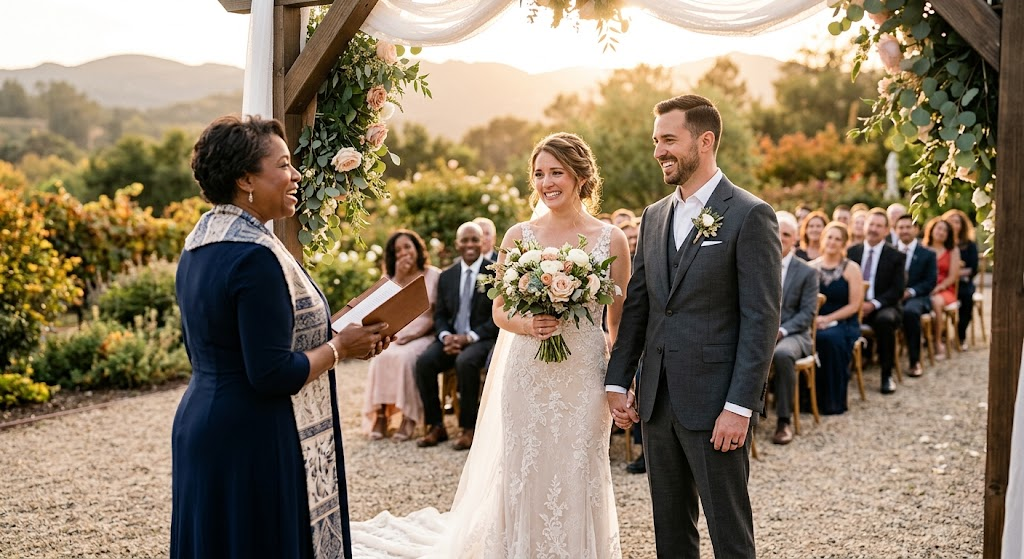
Learning how to officiate a wedding can feel exciting and a little overwhelming, especially when you are officiating for friends or family. The good news is that you do not need to be a professional speaker to create a meaningful ceremony. Good preparation, clear communication, and a calm presence can make a big difference.
The most important part of learning how to officiate a wedding is understanding that the ceremony belongs to the couple. Your role is to guide the event, introduce meaningful words, lead the required portions, and help the ceremony move smoothly from beginning to end.
How to Officiate a Wedding Legally
Before planning the speech, check the legal requirements where the wedding will take place. Requirements for wedding officiants vary by state, territory, province, country, and sometimes local jurisdiction.
In the United States, marriage laws are handled at the state and local level, so there is no single national rule that applies to every ceremony. USAGov recommends contacting the appropriate local government or vital-records office for marriage-related requirements. (USAGov)
If you are learning how to officiate a wedding in a particular location, verify whether you need authorization, registration, documentation, or any other official qualification before the ceremony.
The couple should also understand the requirements surrounding their marriage license. A marriage license legally permits the marriage, while a marriage certificate serves as proof that the marriage occurred.
Check the Local Rules Early
Do not leave legal details until the wedding day. Rules can differ significantly between jurisdictions, and an officiant’s responsibilities may also vary.
For location-specific information, start with the official government website for the place where the marriage will occur. USAGov provides links to state and local government resources that can help you find the appropriate authority.
Meet With the Couple Before the Wedding
A major part of how to officiate a wedding successfully is getting to know what the couple wants.
Ask them about the overall tone of the ceremony. They might want something traditional and formal, relaxed and humorous, spiritual, or highly personal. Their preferences should guide your writing and delivery.
Talk about the ceremony length, readings, music, vows, cultural traditions, family participation, and whether there are subjects they do not want mentioned.
This conversation also gives you an opportunity to learn their story. A few genuine details about how they met, what they appreciate about each other, or what they have experienced together can make your ceremony feel personal rather than generic.
Write the Wedding Ceremony Script
When considering how to officiate a wedding, think of the ceremony as a simple story with a beginning, middle, and ending.
Start by welcoming the guests and acknowledging the importance of the occasion. You can then introduce the couple’s relationship and explain why everyone has gathered.
The ceremony can move naturally into readings, personal reflections, vows, and the ring exchange. The final section usually brings the ceremony toward the couple’s declaration and the official conclusion.
Keep the language natural. If you would not normally say a particular phrase in conversation, rewriting it in your own voice can make your delivery much more comfortable.
Keep the Introduction Personal
A good introduction does not need to be extremely long. A few sincere sentences can establish the atmosphere.
For example, you might say:
“Welcome, everyone. Today we are here to celebrate the love, friendship, and commitment that have brought these two people together.”
From there, you can transition into the couple’s story and the meaning of marriage.
Include the Couple’s Story
One of the best ways to understand how to officiate a wedding is to remember that guests have come to celebrate these particular people.
Choose a few appropriate details rather than trying to tell their entire history. A funny first-meeting story, a meaningful shared experience, or a description of what they admire about each other can make the ceremony memorable.
Avoid private information that the couple has not specifically given you permission to share. Humor should also be respectful and appropriate for the entire audience.
Guide the Vows and Ring Exchange
The vows are usually one of the most meaningful parts of a wedding ceremony. Your job is primarily to introduce and guide this section rather than make it complicated.
Before the wedding, confirm exactly how the couple wants to exchange vows. They may have written personal vows, selected traditional wording, or chosen to repeat short phrases after you.
The same applies to the rings. Know who is holding the rings and whether each person will say anything while exchanging them.
When learning how to officiate a wedding, remember that clear instructions are extremely helpful. A simple prompt such as “Please repeat after me” can prevent confusion.
Practice Your Delivery
Knowing how to officiate a wedding is not only about writing a good script. You also need to practice saying it aloud.
Read the entire ceremony several times. Practice difficult names and unfamiliar words. Mark places where you want to pause or slow down.
Speaking slightly slower than normal can make your delivery easier for guests to follow. If you make a small mistake, stay calm and continue. Most guests will barely notice.
Prepare a Practical Copy of the Script
Bring the final version of your ceremony script with you. Use large enough text to read comfortably and clearly mark important transitions.
Keep the script organized so you can quickly find the next section. A printed copy can also serve as a backup if technology causes problems.
Coordinate With the Wedding Team
Another important part of how to officiate a wedding is communication with everyone involved.
Speak with the couple, wedding planner, photographer, musicians, and venue staff before the ceremony when appropriate. Confirm where you should stand and how the ceremony will begin.
Knowing when music starts, when the couple enters, and when the ceremony transitions to the next section can prevent awkward pauses.
You should also know what happens immediately after the ceremony, particularly if there are photographs, a reception entrance, or paperwork that needs attention.
What to Do on the Wedding Day
On the wedding day, arrive early enough to become familiar with the ceremony space. Check your script, confirm the order of events, and make sure you know where the couple and other participants will stand.
Try not to overthink your performance. Your main responsibility is to help the couple feel comfortable and keep the ceremony moving naturally.
If something unexpected happens, pause and let the appropriate person handle it when possible. A calm officiant can help everyone else remain calm too.
Common Mistakes to Avoid
When learning how to officiate a wedding, remember that the ceremony does not need to be perfect to be meaningful.
Avoid making the ceremony excessively long, using inside jokes that guests will not understand, or turning the speech into a story about yourself. Keep the focus on the couple.
Do not improvise legal wording if the jurisdiction requires specific language. Confirm those requirements with the relevant authority before the ceremony.
Most importantly, do not surprise the couple with an unapproved story, joke, reading, or ceremony tradition. Their wedding should reflect what they have chosen.
Frequently Asked Questions About How to Officiate a Wedding
Do you need to be ordained to officiate a wedding?
Not always. The requirements vary by jurisdiction. Check the official rules where the marriage will take place before accepting the role.
How long should a wedding ceremony be?
There is no universal requirement, but many couples prefer a ceremony that feels meaningful without becoming unnecessarily long. Discuss the preferred length with the couple.
What should an officiant say at a wedding?
An officiant commonly welcomes guests, discusses the couple’s relationship, introduces readings or traditions, guides the vows and ring exchange, and concludes the ceremony according to the couple’s wishes and local legal requirements.
Can a friend officiate a wedding?
In some jurisdictions, a friend may legally officiate if they meet the applicable requirements. Because laws differ, verify the rules with the relevant local authority.
Does the officiant handle the marriage license?
Responsibilities vary by location. The couple and officiant should confirm who must complete, sign, return, or submit the required paperwork under local law. USAGov advises contacting the vital-records authority in the relevant state for marriage-document information.
Conclusion
Understanding how to officiate a wedding is ultimately about preparation, communication, and keeping the focus on the couple. Learn the local legal requirements, work closely with the couple, prepare a thoughtful ceremony, and practice your delivery before the big day.
You do not need to sound like a professional presenter. A warm, confident, and genuine approach can make the ceremony feel personal and memorable.
For legal requirements, always verify the rules with the appropriate state or local authority because marriage and officiant requirements can differ by location.