
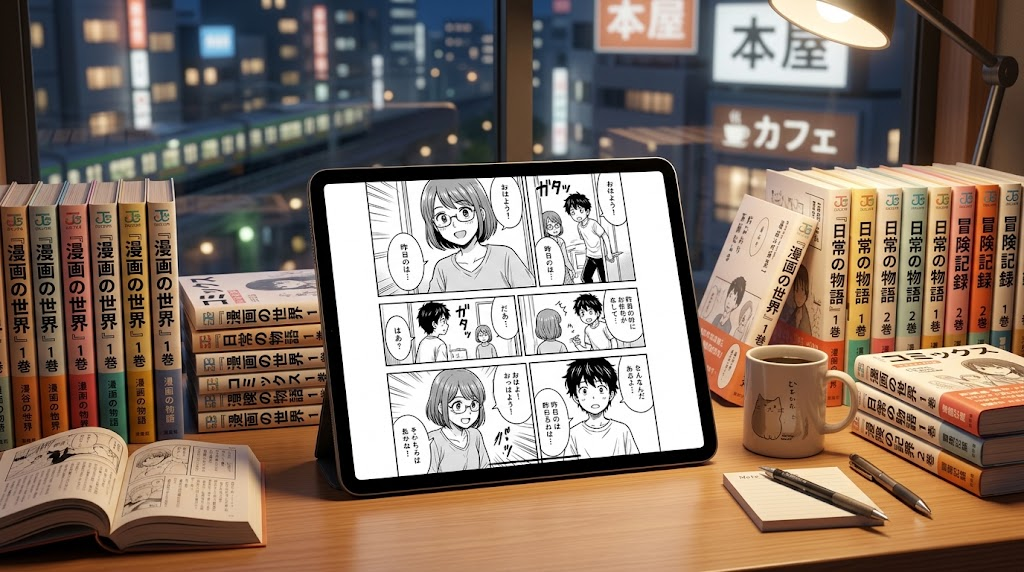
If you have searched for 漫画raw, you may have encountered the term while looking for Japanese manga online. The word “raw” commonly refers to manga in its original Japanese form, usually before an official translation or localization. However, the term can also appear in discussions about unauthorized manga-distribution websites.
Understanding 漫画raw therefore requires some context. Not every reference to Japanese “raw manga” means piracy, but websites that distribute copyrighted manga without permission can create serious copyright and security concerns.
What Does 漫画raw Mean?
The Japanese word “漫画” means manga, while “raw” is commonly used online to describe an original-language version of a work. In manga communities, 漫画raw can therefore refer broadly to Japanese manga that has not been officially translated.
For example, a reader may use “raw manga” to distinguish an original Japanese edition from an officially translated English, Spanish, or other-language edition.
The problem is that 漫画raw is also used as a search term associated with unauthorized online distribution. That makes it important to consider where manga comes from and whether the publisher or copyright holder has authorized its distribution.
Why Is 漫画raw Associated With Online Piracy?
Japanese manga is protected by copyright, just like books, films, music, and other creative works. Japan’s Agency for Cultural Affairs explains that using another person’s copyrighted work generally requires permission unless a legal exception applies. Unauthorized use can potentially result in civil and criminal liability.
This is why 漫画raw can sometimes appear in conversations about manga piracy. Some unauthorized websites reproduce or distribute manga without permission from the creators or publishers.
Japan has taken significant action against large-scale manga piracy. The Agency for Cultural Affairs has documented major cases involving piracy websites and their operators.
Raw Manga vs. Pirated Manga
These two concepts should not be treated as identical.
Raw manga describes the language or edition of the manga. A Japanese-language manga purchased from an authorized publisher can be completely legitimate.
Pirated manga, on the other hand, is manga distributed without the necessary permission of the copyright holder. The difference is not the language of the manga but how the content was obtained and distributed.
This distinction is essential when researching 漫画raw.
Is Reading Manga Online Always Illegal?
No. Reading manga online is not automatically illegal.
Many publishers and services provide authorized digital manga. These platforms obtain the necessary rights and provide manga through legitimate distribution systems.
The important question is whether the website or service has permission to distribute the particular manga. A website offering a popular series for free does not necessarily have authorization simply because the pages are accessible.
When researching 漫画raw, readers should therefore focus on the source rather than assuming that every free manga website is legitimate.
Why Manga Piracy Matters
Unauthorized manga distribution can affect creators, artists, translators, publishers, editors, and other people involved in producing and distributing manga.
Japan’s Agency for Cultural Affairs has reported substantial damage from manga and magazine piracy. Its research on major piracy sites described enormous numbers of unauthorized views and significant estimated losses to the publishing industry.
The agency has also documented how piracy sites can generate advertising or other revenue from large amounts of unauthorized traffic.
For readers interested in 漫画raw, this provides useful context: the availability of a free copy does not mean that nobody is paying a cost.
Security Risks of Unofficial Manga Websites
Copyright is not the only concern surrounding 漫画raw searches.
Unofficial websites may contain aggressive advertising, misleading download buttons, redirects, or other unwanted content. Some may also encourage visitors to install unfamiliar browser extensions or software.
A legitimate manga service generally provides clearer information about its publisher, terms, privacy practices, and content licensing.
If a website suddenly asks you to install an unknown application or provide unnecessary personal information just to view manga, that is a strong reason to leave the site.
Why Official Manga Sources Are Better
Official manga platforms provide several advantages beyond legality.
Authorized services help readers support the creators and publishers responsible for the manga they enjoy. They can also provide better-quality pages, reliable translations, consistent releases, and clearer information about availability.
For people searching 漫画raw because they want Japanese-language manga, an authorized Japanese edition can be a better option than an unknown website offering unauthorized scans.
The exact availability of a series depends on the publisher, country, language, and licensing agreement.
How to Check Whether a Manga Source Is Legitimate
When researching 漫画raw, look for signs that a service is connected to a recognized publisher, distributor, or authorized digital platform.
A legitimate service should normally provide information about its company or publisher, terms of use, privacy policy, and content rights. It should also avoid pretending that copyrighted works are freely available without explanation.
If the source is unclear, searching for the manga publisher’s official website is a safer way to confirm where the series can legally be read.
The Japanese Manga Industry and Anti-Piracy Efforts
Japan’s publishing industry has invested considerable effort in combating unauthorized manga distribution.
The Content Overseas Distribution Association has reported enforcement actions against major manga piracy operations. For example, CODA reported the closure of 13DL, a large Japanese publication piracy site, in 2023. (CODA)
Publishers also issue takedown requests against unauthorized uploads and links. A Media Arts Current Contents interview with Shueisha described large-scale efforts to remove unauthorized manga from websites, search engines, social platforms, and other services.
These efforts show why websites associated with piracy can disappear or change domains.
漫画raw and the Future of Digital Manga
Digital distribution has made Japanese manga easier to access around the world. At the same time, publishers have had to develop new ways to protect their work from unauthorized copying and distribution.
The growth of official digital services means readers increasingly have legitimate options for discovering Japanese manga without relying on unknown sources.
For anyone searching 漫画raw, understanding the difference between original Japanese manga and unauthorized distribution is therefore more useful than simply looking for a website.
Frequently Asked Questions
What does 漫画raw mean?
漫画raw generally refers to Japanese-language or original manga, although the term is also commonly associated online with unauthorized manga-distribution searches.
Is raw manga the same as pirated manga?
No. “Raw” describes the original-language version. Piracy refers to unauthorized distribution or use of copyrighted material.
Is reading manga online illegal?
Not necessarily. Reading manga through an authorized publisher or licensed digital service is generally different from accessing an unauthorized copy.
Why are manga piracy websites risky?
Besides copyright concerns, unofficial sites can expose visitors to misleading advertisements, redirects, unwanted downloads, and other security risks.
How can I read Japanese manga legally?
Look for official publisher websites and licensed digital manga services. Availability varies by series, country, and language.
Conclusion
The term 漫画raw has a relatively simple meaning in one context: it can describe manga in its original Japanese form. However, online searches for the term can also lead toward discussions of unauthorized manga distribution.
The safest approach is to distinguish original-language manga from pirated copies and use authorized sources whenever possible. Japan’s Agency for Cultural Affairs and other industry organizations have documented the significant impact of manga piracy and ongoing efforts to combat unauthorized distribution.
For manga fans, supporting legitimate publishers and creators helps ensure that new stories can continue to be produced while providing a safer and more reliable reading experience..