
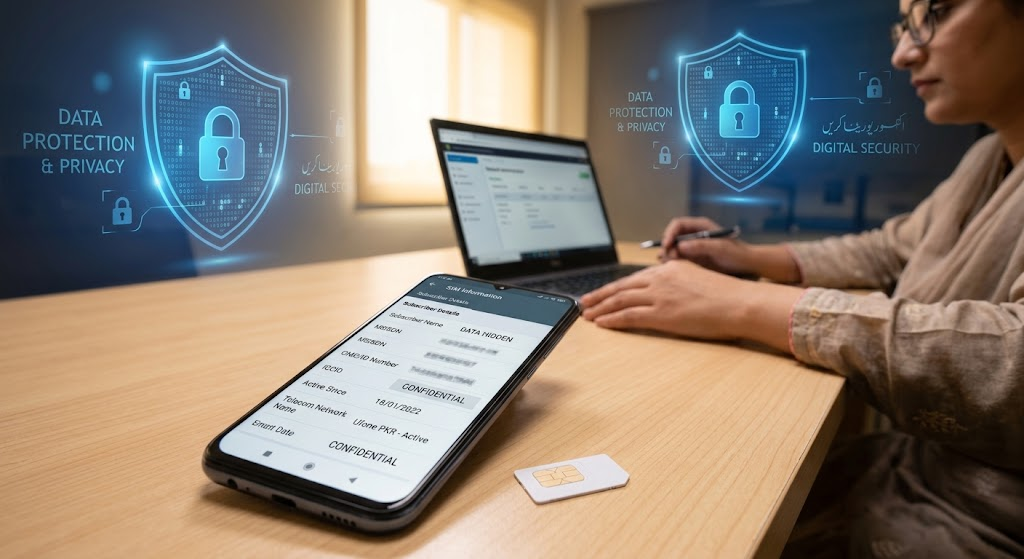
Searching for SIM owner details is common when people want to know which mobile numbers are registered against their own identity. In Pakistan, SIM registration is linked to subscriber verification, so protecting this information is important for both privacy and security.
If you are looking for SIM owner details, it is important to understand the difference between checking SIMs registered to your own CNIC and trying to obtain another person’s private information. The first is a legitimate account-management task, while the second can raise serious privacy and security concerns.
What Does SIM Owner Details Mean?
SIM owner details generally refers to information connected with the registered subscriber of a mobile SIM. Depending on the authorized service and purpose, subscriber records may involve identity information used to verify who a SIM belongs to.
In Pakistan, telecommunications services use subscriber verification procedures. PTA’s National Telecom CERT guidance specifically warns about SIMs being issued without proper verification and advises consumers to periodically check the number of SIMs issued in their name.
Because subscriber information is personal data, it should not be treated like ordinary public information. PTA’s telecom cybersecurity regulations identify information such as names, addresses, CNIC numbers, phone numbers, and related telecom information as personal data.
How to Check SIMs Registered to Your Own CNIC
If your goal is to check SIM owner details for your own identity, PTA guidance provides an official method. The guidance says users can check the number of SIMs issued in their name by sending their CNIC number to 668.
This process is particularly useful if you are concerned that a SIM may have been registered using your identity without your knowledge.
If the result shows an unexpected SIM registration, contact the relevant mobile operator through its official customer-service channels and request clarification or blocking of an unauthorized connection.
Why Checking Your Own Registration Matters
Checking SIM owner details associated with your own CNIC can help you identify registrations that you do not recognize. This is especially important because unauthorized SIM issuance can create security and fraud risks.
PTA’s National Telecom CERT advises consumers to purchase SIMs from authorized cellular franchises and to check periodically for SIMs issued in their name.
Regular account checking is therefore a useful part of protecting your digital identity.
Can You Find Another Person’s SIM Owner Details?
A common search involving SIM owner details asks whether someone can enter a mobile number online and discover the registered person’s name, CNIC, address, or other private information.
You should be cautious with websites, apps, social-media pages, or individuals claiming to provide complete subscriber records. Private telecom information should not be obtained through unauthorized databases or leaked records.
PTA’s telecom security regulations recognize subscriber-related information as personal data, which makes unauthorized disclosure or use a significant privacy concern.
For legitimate investigations or legal matters, the appropriate route is to use authorized telecommunications, regulatory, or law-enforcement procedures rather than attempting to access private subscriber records independently.
SIM Owner Details and CNIC Verification
The connection between a SIM and a CNIC exists because mobile subscriber registration requires identity verification. This helps telecommunications providers establish who is authorized to use a particular connection.
For consumers, this means your CNIC information should be handled carefully. Avoid giving your identity information to unknown people, websites, or unofficial SIM-registration services.
PTA’s cybersecurity guidance warns about illegal SIM issuance and describes risks involving the misuse of biometric information.
Beware of Fake SIM Owner Details Websites
Searching for SIM owner details can lead to websites claiming to provide instant information about a phone number’s owner. Such services deserve particular caution.
A website requesting your CNIC, phone number, password, OTP, fingerprint information, or other sensitive details may create a privacy or fraud risk. A professional-looking website is not proof that it is officially connected to PTA or a mobile network.
Do not enter sensitive information simply because a website promises a “100% accurate” SIM-owner database.
How to Protect Your SIM Information
Protecting SIM owner details begins with protecting the identity information used during registration. Never casually share your CNIC information or biometric data with unknown individuals.
When purchasing or replacing a SIM, use an authorized mobile operator outlet and follow the provider’s official verification procedure. PTA’s cybersecurity guidance specifically recommends purchasing SIMs from cellular franchises rather than informal kiosks or unverified sellers.
You should also treat unexpected SMS messages, calls, and requests for verification codes carefully. A legitimate service should not require you to disclose an OTP to an unknown caller.
What to Do About an Unauthorized SIM
If your own SIM owner details check reveals a SIM that you do not recognize, do not ignore it. Contact the relevant mobile network and explain that the registration is unfamiliar.
Ask the operator to investigate the registration and follow its official process for blocking or correcting an unauthorized connection.
If the issue involves suspected fraud or misuse of personal information, you can also use PTA’s official complaint system. PTA’s Complaint Management System uses verified user accounts and CNIC-based authentication for complaint management.
For serious cyber incidents, PTA’s National Telecom CERT also provides cybersecurity awareness and incident-related resources.
SIM Owner Details: Official Sources Are Better
When researching SIM owner details, always give priority to official sources. The Pakistan Telecommunication Authority is the relevant telecom regulator, and its National Telecom CERT publishes consumer guidance concerning SIM security and identity protection.
Third-party websites may contain outdated, incomplete, or illegally obtained information. Even if a site displays a person’s name alongside a phone number, that does not prove the information is accurate or lawfully obtained.
For your own account, use the official verification and customer-service channels provided by your mobile operator and PTA.
Why Privacy Matters
The search for SIM owner details may appear simple, but subscriber information can be closely connected to a person’s identity. A phone number can also be associated with messaging accounts, financial services, social networks, and other digital services.
This makes unauthorized disclosure particularly risky. Protecting subscriber information helps reduce opportunities for identity theft, impersonation, scams, and other forms of misuse.
Good digital security therefore means not only checking your own registrations but also respecting the privacy of other subscribers.
Final Thoughts on SIM Owner Details
SIM owner details are sensitive subscriber information, so they should be handled through legitimate and authorized channels. In Pakistan, PTA guidance provides a way for consumers to check the SIMs registered in their own name by sending their CNIC number to 668.
If you discover an unfamiliar registration, contact the relevant mobile operator and use official complaint procedures where necessary. Avoid websites or individuals promising unauthorized access to another person’s private subscriber information.
For related content on your website, you can internally link this article to pages about PTA SIM verification, CNIC security, mobile network safety, and online privacy. External references should preferably point to official PTA resources.
FAQs About SIM Owner Details
How can I check SIMs registered in my name?
PTA’s cybersecurity guidance says you can check SIMs issued in your name by sending your CNIC number to 668.
Can I legally obtain another person’s SIM owner details?
Private subscriber information should not be obtained through unauthorized databases or services. Use official procedures for legitimate legal matters.
Why is SIM registration connected to CNIC?
CNIC-based verification helps telecommunications providers authenticate subscribers and reduce unauthorized SIM issuance.
What should I do if I find an unknown SIM on my CNIC?
Contact the relevant mobile operator and request investigation or blocking of the unauthorized registration. You can also use PTA’s official complaint process when appropriate.
Are websites offering instant SIM owner details trustworthy?
Do not assume they are. Avoid giving sensitive information to unofficial websites, particularly those requesting CNIC numbers, OTPs, passwords, or biometric information.